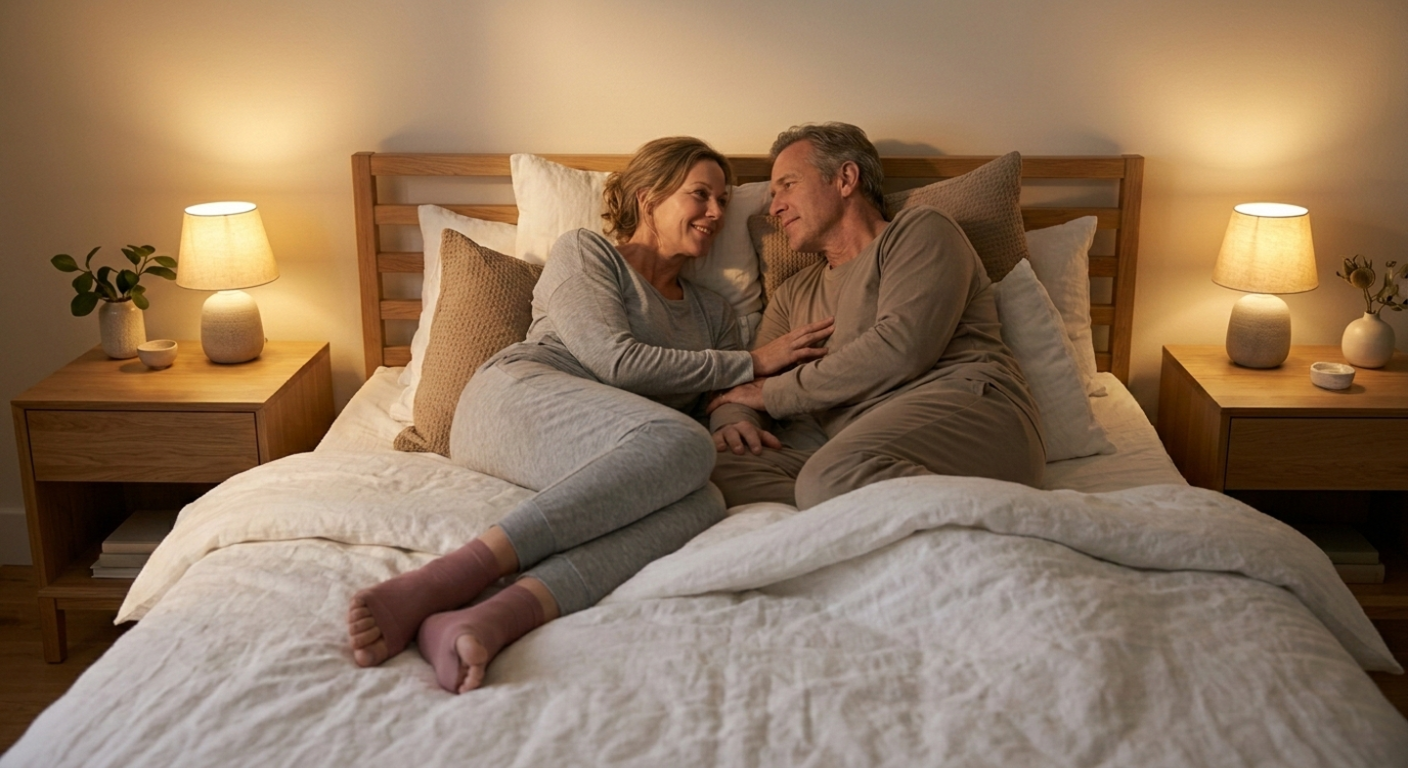
Does a TENS machine work for Restless Legs?
It helps some people, in the evening, usually as an extra rather than a replacement. A small 2024 trial found that adding TENS sessions to a low dose of Restless Legs medication improved symptom scores and sleep quality more than the medication on its own. Nobody has shown it works as a standalone fix.
Wanting something you can switch on yourself, without swallowing anything, is completely reasonable. That is most of the appeal. It is drug-free, you own it outright, and you can use it whenever the legs start winding up. Plenty of people reading this have already had the tablets conversation and did not love where it landed.
The practical reality of a session is what puts most people off, so it is worth picturing before you buy. You stick adhesive pads on your legs, wire them to a small battery-powered unit, and run electrical pulses for twenty or thirty minutes while sitting still. That is a treatment session, not a way to get through the night.
Think of a TENS machine as something you do before bed, in the same bracket as a warm bath or a stretch routine. Have you tried a warm bath? Yeah, most people have tried that too. It may take the edge off. It is not sitting there working at 2am when the legs come back.
What does the research on TENS for Restless Legs actually say?
The numbers are better than nothing, and smaller than the marketing suggests. The strongest study is Şanli and colleagues (2024) in the Journal of Sleep Research. Forty-six adults with Restless Legs Syndrome were split into two groups. One took a low daily dose of pramipexole. The other took the same dose plus ten TENS sessions over four weeks.
Both groups improved, which is the first thing worth sitting with. The combined group improved more, on both symptom severity and sleep quality, and the gap held at the eight-week follow-up. The researchers concluded that TENS combined with a low dose of the medicine was therapeutically useful compared with the medicine alone.
Read that sentence again, because it is the part that gets dropped. Every single person in that trial was on medication. The study answers “does TENS add anything on top of a tablet”, not “can TENS replace the tablet”. Those are very different questions, and only one of them was tested.
If you are about to spend money on this, the weak spots in that study are worth knowing. Forty-six people is small. It was single-blind, so participants knew what they were getting, and expectation does real work in a condition measured by how you feel. There was also no sham group receiving fake stimulation.
None of that makes TENS a con. It makes it an unproven add-on with a bit of encouraging signal behind it, which is a perfectly honest thing for a device to be. It is just not the same as evidence that it works on its own, overnight, for you.
TENS unit vs compression for Restless Legs: what is actually different?
Knowing which of these you can wear to sleep is the thing that decides it for most people. Both are drug-free, both work through the legs, and they get lumped together constantly. They are not the same kind of thing at all.
| TENS machine | Overnight compression | |
|---|---|---|
| What it does | Sends electrical pulses through skin pads | Applies steady targeted pressure |
| When you use it | Awake, sitting, 20 to 30 minute sessions | Worn through the night while you sleep |
| Power source | Battery unit, wires, adhesive pads | None, nothing electrical |
| Best evidence in Restless Legs | 46 adults, added on top of medication | Randomised sham-controlled trial, plus an 8-week study |
| Ongoing cost | Replacement pads | None |
| Covers the 2am wake-up | No, you would have to get up and set it up | Yes, it is already on |
That last row is the whole argument, and it is not a technicality. Restless Legs is worst at night and at rest, which is exactly when you are least willing to get out of bed and sit up for half an hour. A treatment you cannot use during the hours you need it is doing half a job.
Cost lands differently too. A decent TENS unit runs roughly one hundred to three hundred dollars in Australia, then adhesive pads need replacing every few weeks. Compression has no consumables.
If you want the full picture of what has actually been trialled here, our guide to whether compression helps Restless Legs covers the studies in detail. Our roundup of the best compression for Restless Legs explains why ordinary compression socks are a different product again.
Can you use a TENS machine while you sleep?
No, and this is the part most people do not find out until the box is open. Standard TENS instructions, including NHS patient guidance, say not to use one while asleep. The pads can shift, the intensity cannot be turned down if it starts to sting, and you cannot notice skin irritation you are not awake for.
Being told your overnight problem needs a daytime device is genuinely annoying, and it is fair to feel that. Symptoms worsen in the evening and at rest, which is exactly the window a TENS session sits just outside of. Our guide to stopping Restless Legs at night walks through why the timing works that way.
There are also people who should not use one at all without medical advice. If you have a pacemaker or another implanted electrical device, are pregnant, have epilepsy, or have reduced sensation in your legs, check with your GP or physiotherapist first. Pads should never go over broken skin.
What about the newer electrical stimulation devices for Restless Legs?
Something better tested does exist, and it is worth knowing it is a different product from a shop-bought TENS unit. Buchfuhrer and colleagues (2021), in the Journal of Clinical Sleep Medicine, tested a prescription nerve stimulation device on 37 adults in a randomised crossover trial against a sham version.
The relief was measurably bigger than anything the TENS research has produced. Symptom severity fell by 6.81 points on the standard rating scale with the real device, against 3.38 with the sham, over fourteen nights each. A proper sham comparison is exactly what the TENS studies are missing.
Two things stop it being the answer for most Australian readers. It is a prescription device rather than something you buy off a shelf, and it is not readily available here. It is also not a TENS machine, so buying a TENS unit does not get you those results. It is, however, the device usually meant when someone asks whether there is a new cure for Restless Legs, which is worth knowing before you spend money chasing the headline.
If you are weighing up drug-free options generally, our guide to drug-free Restless Legs treatment sets out the full field. Our weighted blanket comparison covers the other device people ask about most.
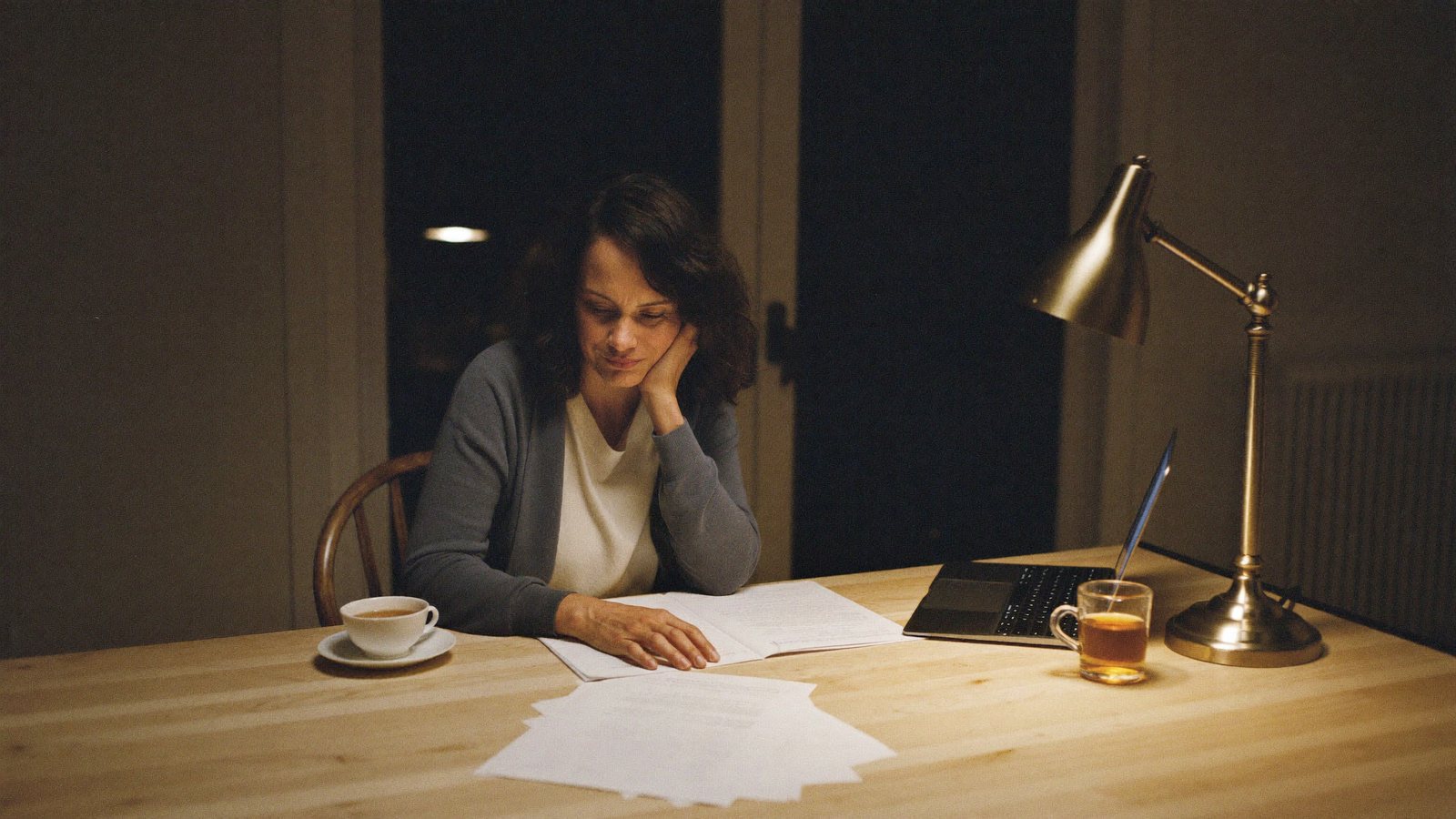
What the research actually shows
Four studies decide this question, and it helps to see them side by side. The TENS evidence is one small trial where everyone was also on medication. The prescription stimulation evidence is stronger but the device is hard to get in Australia. The compression evidence includes a properly sham-controlled trial. Here is what each one can and cannot tell you.
TENS as an add-on. Şanli et al. (2024), Journal of Sleep Research, followed 46 adults for four weeks with an eight-week follow-up. Adding ten TENS sessions to a low dose of pramipexole beat the medicine alone on both symptom severity and sleep quality. Everyone in the trial was medicated, and there was no sham group.
Prescription nerve stimulation. Buchfuhrer et al. (2021), Journal of Clinical Sleep Medicine, ran a randomised crossover trial in 37 adults against a sham device. Symptom severity fell 6.81 points versus 3.38 for sham. Stronger design, different device, not sold over the counter in Australia.
Compression, properly controlled. Lettieri and Eliasson (2009), in Chest, ran a randomised, double-blinded, sham-controlled trial of pneumatic compression in 35 adults. Symptom severity fell about 40 per cent, from 14.1 to 8.4 on the standard scale, and roughly one third reported complete relief while nobody on the sham did. We go through every published trial in our compression evidence review.
Compression over eight weeks. Kuhn et al. (2016), in the Journal of the American Osteopathic Association, followed 30 adults using targeted foot compression. Participants recorded a 90 per cent improvement on the Clinical Global Impression scale, against the 63 per cent published for ropinirole. The study had no control group, so that drug figure came from earlier separate trials.
The pattern across all four is simple enough. The drug-free approaches with the most convincing designs behind them are the ones applying pressure, not current. That is the honest read, and it is also why our compression versus medication comparison exists.
What Stillr is, and isn’t
Getting through the night without setting anything up is the whole point, and that is what Stillr is: a drug-free compression sleeve worn overnight on both legs, no batteries, no wires, nothing to swallow. It is not a medicine, not a cure, and no substitute for your GP.
Stillr is pre-launch in Australia and not yet available for supply, so no price is published. You can reserve a pair on the founders’ list.
If you have reached the point of pricing electrical devices at 11pm, what you are really after is a night you do not have to manage. Something that is already on when the legs start, instead of something you have to get up and switch on. You can reserve your pair and join the founders’ list at stillr.com.au.